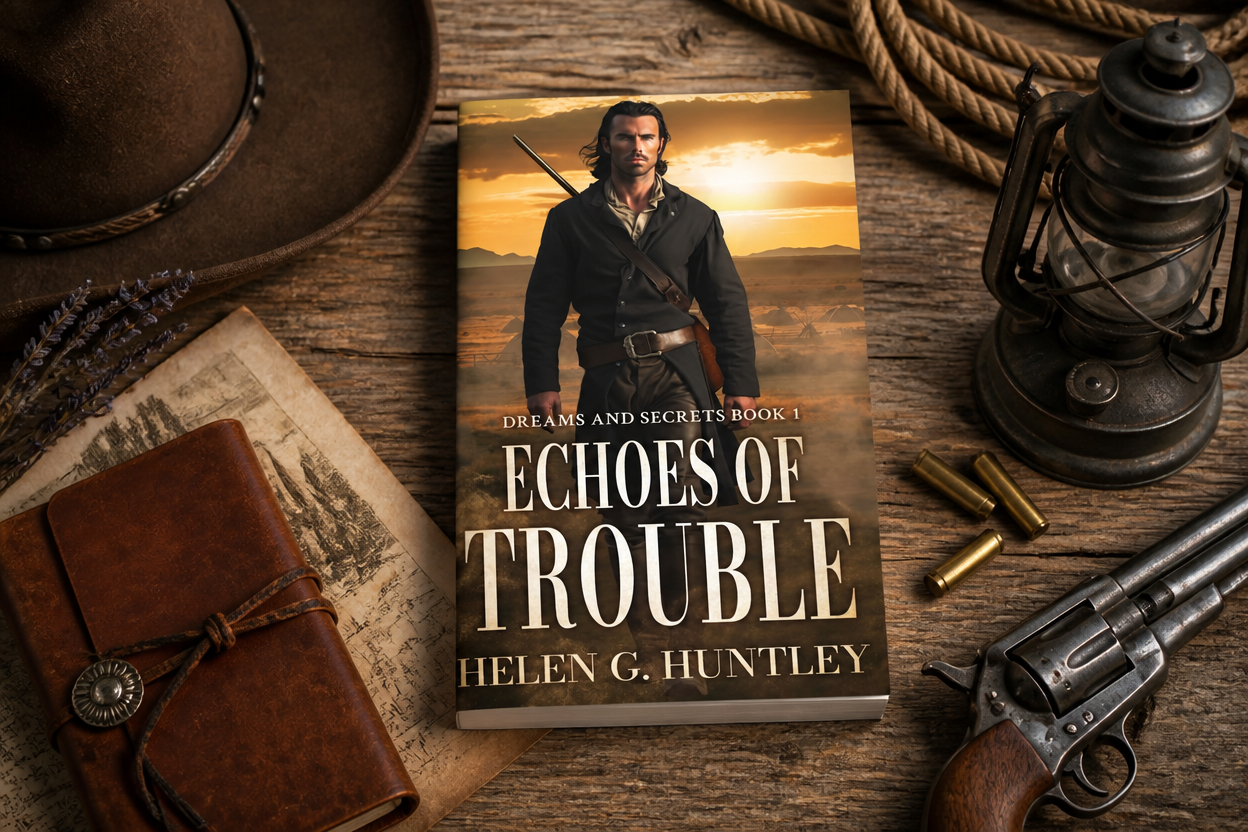
When Actions Matter More Than Words — The Heart Behind Echoes of Trouble
One thing I’ve always loved about Westerns is that they often deal with people who are not good at talking about how they feel.
They work. They endure. They survive. They protect the people they care about. But putting emotions into words? That is often the hardest thing of all.
At the center of Echoes of Trouble is Potter Evans, a young woman who finds herself caught between love, fear, survival, and the painful realization that sometimes caring for someone is not always enough to make a relationship work.
The man she leaves behind is not cruel or uncaring. He loves her deeply. But he struggles to communicate, and over time silence creates distance between them. That was one theme I explored throughout the story: how often actions can carry emotions that words cannot express.
Some people say “I love you” easily.
Others show it by standing beside someone in dangerous moments, by sacrificing for them, or by refusing to abandon them when life becomes difficult.
I think Echoes of Trouble asks whether love can survive when two people struggle to truly reach one another.
The novel is also very much about survival. I never wanted the West to feel overly romanticized or polished. The Colorado frontier in 1875 could be beautiful, but it could also be dangerous, lonely, and unforgiving. Nature itself could become a threat just as easily as the people inhabiting it.
As Potter’s journey unfolds, she finds herself among the Arapaho, and that experience becomes deeply important to her understanding of both herself and the world around her. Rather than simply being a refuge, it becomes a place where many of her assumptions change. Throughout the story, I wanted to explore how people from unique backgrounds can still find humanity, compassion, and respect for one another.
Another thread running through the novel is obsession and the damage it creates. Some people in life become consumed by their desires to the point where they stop seeing others as human beings and begin viewing them as possessions or obstacles. That danger hangs over much of the story and forces the characters into situations where courage is measured not by grand speeches, but by choices made in desperate moments.
At its heart, Echoes of Trouble is still an adventure story. There are pursuits, danger, conflicts, and suspense. But underneath all of that, it is really about flawed people trying to navigate love, fear, loyalty, and survival in a difficult world.
And perhaps most of all, it is about the quiet truth that sometimes the strongest feelings are the hardest to say aloud.